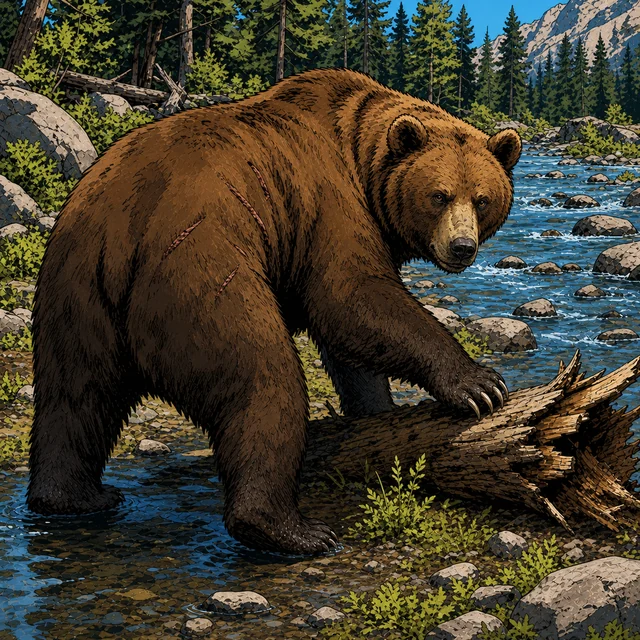
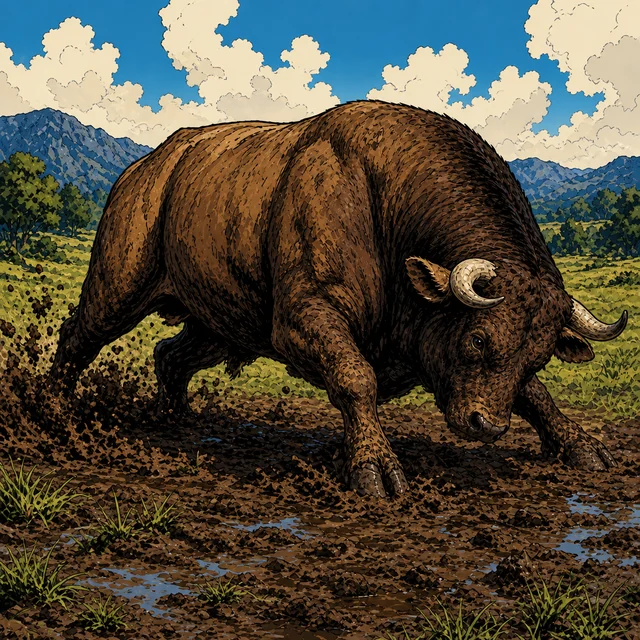
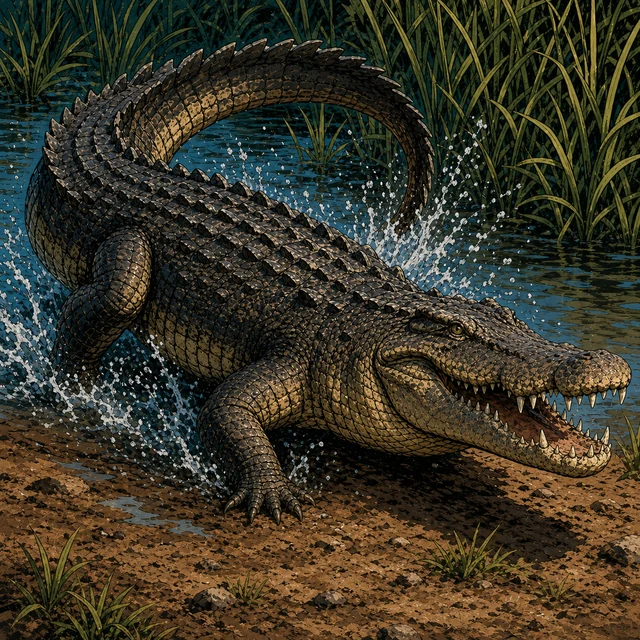
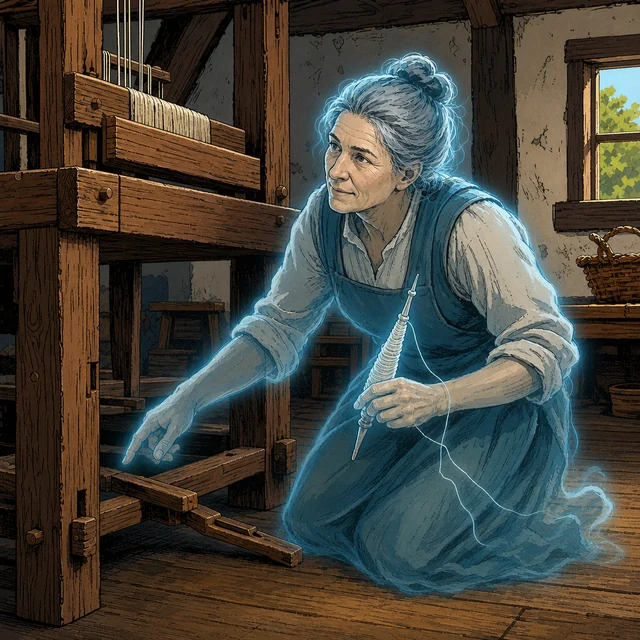
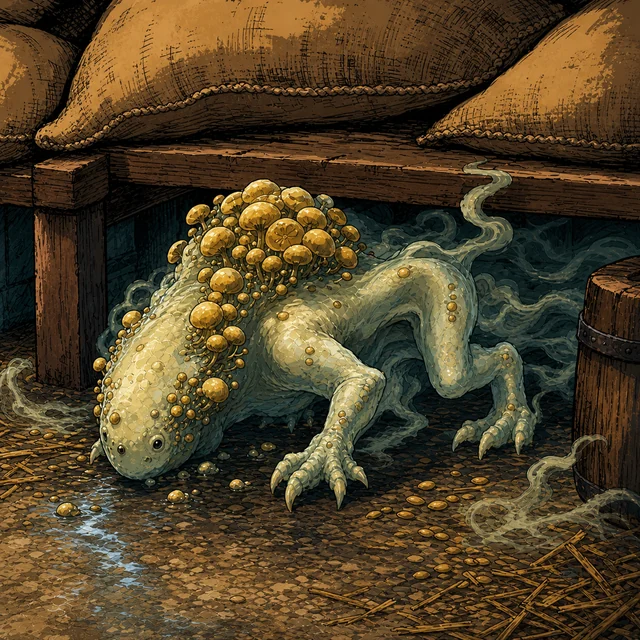
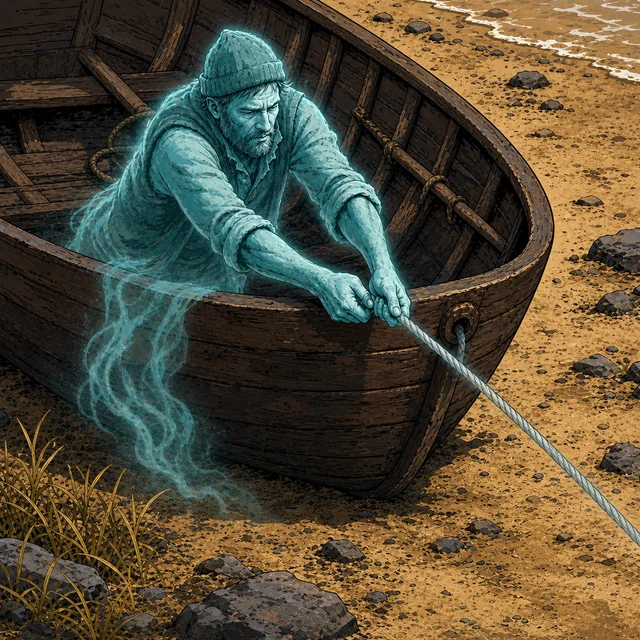
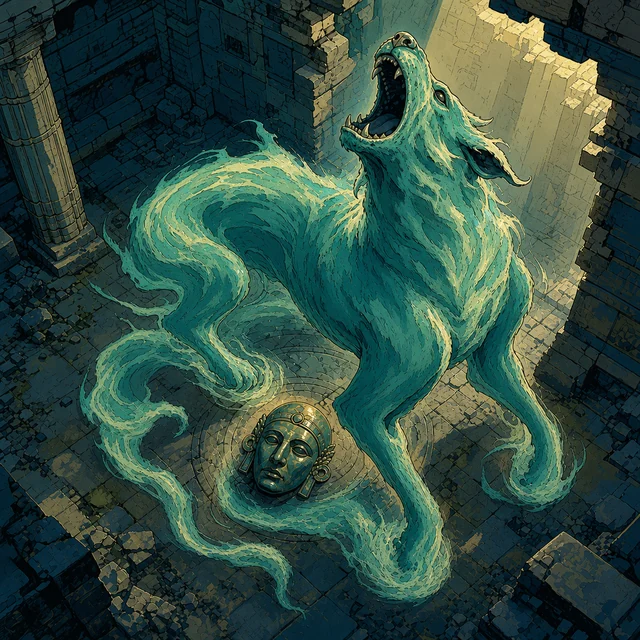
Ready-to-play profiles for animals, monsters, nymphs, spirits, and the undead, with the tags and shared procedures that govern them.
Every profile is ready to use: characteristics, derived attributes, skills, attacks, and abilities are already calculated with the standard formulas. Read the shared rules below first, then take any profile straight to the table.
Tags carry most of the weight. They decide whether wounds, poison, Mind effects, and Spirit Combat reach a creature at all, so check them before applying any rule that assumes a living body.
Filter the bestiary by type to find the creatures a scene needs.
Using Creatures
A profile is the bare bones of an average member of its kind; build on it for a named opponent, a player character, or a harder encounter.
Using Creatures. A profile is the bare bones of an average member of its kind; build on it for a named opponent, a player character, or a harder encounter. Also known as monsters as player characters, encounter design, building a monster, Threat Intensity, creature threat.
Creatures are as detailed as the characters who meet them. They have skills, weapons, abilities, and motives that bring them into conflict with the player characters. They are not cannon fodder to be killed and looted.
Each profile is the bare bones of its kind: use it as written for an average member of the species, or as an example for the creatures your campaign needs. An intelligent creature’s profile describes one ready-to-use individual, often equipped for danger. It does not assign morality, culture, or allegiance to every member of that people.
Building on a profile
Monsters are people too. To make one that deserves a name, start from the profile, decide on a concept, and add the skills, characteristics, and abilities it implies. For a truly significant opponent, build the creature as a player builds a character; it then stands at comparable experience to the party and fights like it.
Creatures as player characters
Many profiles could serve as player characters. Human, Elf, Dwarf, Orc, Goblin, and Lizardfolk are the recommended player races, because their capabilities suit a typical adventuring company. Others, including Merfolk and Pixies, are available at the Gamemaster’s discretion when the campaign can accommodate their movement, scale, or other needs. Fantasy Races gives the recommended nonhuman races complete starting spreads, racial maxima, and Improvement Point costs.
Scaling an encounter
Be careful adding bodies to raise difficulty. Combat works best with roughly as many creatures as player characters, and a crowd of weak opponents mostly costs table time.
Raise the power of individual creatures instead. Better skills, better equipment, an extra ability, or Shaping cells bring one creature closer to the party’s level without slowing the round.
Threat Intensity
Threat Intensity rates a creature on Shaping’s 1–5 Intensity scale. Calling uses it, and it gives a quick measure of a creature’s danger.
Rating
Body: HP, or PP if Incorporeal
Best attack
1
Up to 5
Up to 25%
2
6–10
26–40%
3
11–15
41–60%
4
16–25
61–80%
5
26+
81%+
Average the body and attack ratings, rounding up; a creature without an attack uses its body rating. Then add 1, once, for any area attack, Shaping, Regeneration, petrifying or paralysing attack, or, for a Corporeal creature, immunity to mundane weapons. The maximum is 5.
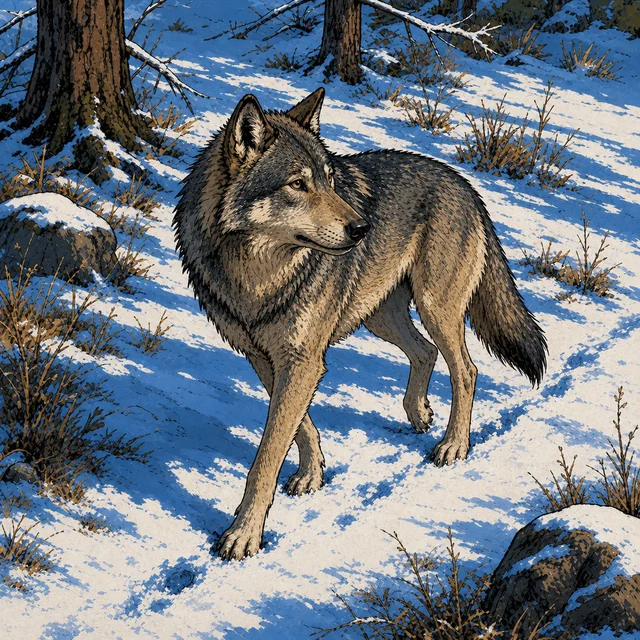
Example. A Wolf (12 HP, 50%) rates 3 and 3: Threat Intensity 3. A Magic Spirit (14 PP, 50%) rates 3, plus 1 for Shaping: 4. A Troll (23 HP, 40%) rates 4 and 2, averaging 3, plus 1 for Regeneration: 4.
Reading a Profile
Every profile lists ready-to-play values: HP, MWL, PP, and Combat Order follow the standard formulas.
Reading a Profile. Every profile lists ready-to-play values: HP, MWL, PP, and Combat Order follow the standard formulas.
Characteristics and attributes are fixed, ready-to-play values for an average, unremarkable member of the species. HP is (SIZ + CON) / 2, MWL is HP / 2, PP normally equals POW, and Combat Order is (DEX + INT) / 2 minus worn-armour ENC. Unlisted skills use their normal base values.
Characteristic dice. Most characteristics also list the dice they came from, such as 4D6 under STR 14. 4D6 drop lowest means roll four dice and discard the lowest. Roll a listed die to vary an individual, build a named creature, or make a group whose members differ; then recalculate HP, MWL, PP, Combat Order, and Damage Modifier. A characteristic with no listed die is fixed, such as a summoned being’s stats or an undead’s 0 POW.
Attacks. An attack lists its skill, base damage, and Size. Add DM once to close, unarmed, and thrown damage; bows, slings, and crossbows never add it. Natural weapons are Light at SIZ 1–5, Medium at 6–20, Heavy at 21–40, and Huge at 41+. Ordinary fists and kicks stay Light.
Paralysed creatures stay conscious and make passive resistance tests, but cannot take Actions or Reactions or move voluntarily.
Creature Tags
Ten tags decide which wound, magic, and Spirit rules reach a creature, and which never touch it.
Creature Tags. Ten tags decide which wound, magic, and Spirit rules reach a creature, and which never touch it.
Living: a biological living creature. It follows the normal Major Wound, Bleeding, Dying, and 0-PP rules.
Corporeal: has a material body and can be affected by physical attacks.
Incorporeal: has no physical characteristics, HP, MWL, AP, or DM. Mundane physical attacks cannot harm it.
Spirit: a soul-being, valid for Spirit effects and Spirit Combat. Spirits are not automatically Undead.
Construct: a made, nonliving creature. It is Soulless; a programmed Construct is Mindless, a free-willed one is not.
Elemental: a nonliving, Corporeal, Mindless, Soulless magical substance or force, not a Spirit.
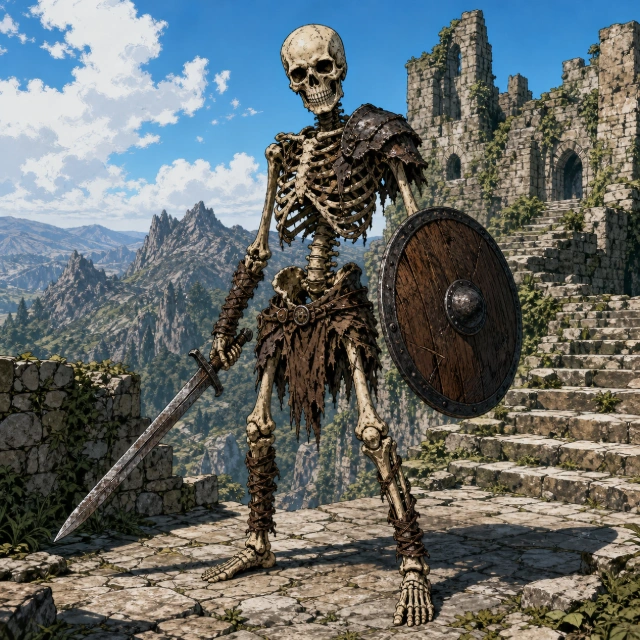
Undead: a Corporeal, Soulless dead body. Ghoul, Mummy, and Vampire are intelligent; Skeleton and Zombie are Mindless.
Soulless: has no soul, cannot enter Spirit Combat or be possessed, and is invalid for Spirit effects. It can still have a Mind.
Mindless: has no thoughts or identity and is invalid for Mind effects. Animals are not Mindless.
Anchored: bound to a named place, object, or body. The profile states the boundary and consequence.
Which magic reaches them. Flesh affects biological matter, living or dead: people, beasts, plants, bone, corpses, flesh constructs, and corporeal undead. Mind affects every non-Mindless creature, including a Soulless one. Spirit never affects Soulless creatures.
Nonliving bodies. A nonliving Corporeal Construct, Elemental, or Undead does not breathe, eat, sleep, or suffer poison, disease, suffocation, starvation, thirst, or ordinary fatigue, unless its profile says otherwise. It becomes Wounded after a Major Wound but never Bleeding or Dying; at 0 HP it is disabled or destroyed. It stays active at 0 PP. By contrast, at 0 PP a Living creature falls unconscious, and a Spirit is banished from the scene, ending any possession.
Nymphs are Corporeal Spirits with Anchors. Destroying a nymph’s body returns its spirit to the anchor; unless its profile says otherwise, it reforms there after 2D6 days.
Creature Talents
Creature profiles list player Talents and the creature-only Exceptional Skill feature; creatures never pay Improvement Points for them.
Creature Talents. Creature profiles list player Talents and the creature-only Exceptional Skill feature; creatures never pay Improvement Points for them.
A profile can list any Talent. Talents work exactly as written, but creatures never pay Improvement Points or meet prerequisites.
Exceptional Skill (skill) I–III
Exceptional Skill preserves competence that would otherwise need a skill above 100%. Historical ratings of 101–125 become rank I, 126–150 become rank II, and 151+ become rank III; published profiles already list the resulting rank.
After ordinary Bonus and Penalty cancellation, but before the final dice cap, remove up to the rank in remaining Penalty dice from the named skill or profile roll. This can remove a Multiattack Penalty die. It never creates Bonus dice, raises a skill above 100%, or widens its critical range.
Multiattack
A listed Multiattack spends one Combat Action, resolves the first attack normally, and takes -1P on each later attack.
Multiattack. A listed Multiattack spends one Combat Action, resolves the first attack normally, and takes -1P on each later attack.
A listed Multiattack spends one Combat Action. Make the first attack normally and each later attack at -1P; the penalties are separate, not cumulative.
Attacks can choose the same or different targets. Each resolves separately and allows its own Reaction.
The creature keeps its base Reaction. Dodge remains limited to the base Reaction, once per round.
Multiattack cannot be a Reaction, and cannot combine with Charge, an off-hand attack, Rapid Shot, or another extra-attack source.
Creature Senses
Night Vision, Low-Light Sight, Blind Sight, and Spirit Sense each replace ordinary sight only in the conditions they name.
Creature Senses. Night Vision, Low-Light Sight, Blind Sight, and Spirit Sense each replace ordinary sight only in the conditions they name.
Night Vision treats natural surface night as Illuminated. It does not help underground, in sealed or supernatural darkness, or against obscurity.
Low-Light Sight treats Partial Darkness as Illuminated and Darkness as Partial Darkness. Pitch Black is unchanged.
Blind Sight (sense) ignores illumination, but only for targets the named sense accurately perceives. It grants no colour, writing, fine visual detail, or eye contact, and its stated barriers still block it.
Use only the best sense; senses do not stack. These match the player senses.
An Incorporeal Spirit is invisible unless it manifests. Manifesting or fading spends its Combat Action and changes only visibility. Every Spirit has Spirit Sense: it detects other Spirits within POW metres, manifested or not. Physical and magical barriers can block it when appropriate.
Spirit Combat and Possession
Spirit Combat spends a Combat Action at Close range, drains PP through AP, and can end in possession that shares one set of actions.
Spirit Combat and Possession. Spirit Combat spends a Combat Action at Close range, drains PP through AP, and can end in possession that shares one set of actions.
Only a creature with Spirit Combat can start it. Spend a Combat Action at Close range; no Reaction is spent. The defender opposes with its own Spirit Combat or Persistence.
The winner deals its listed PP damage, ignoring AP. A defender using Persistence deals 1D4 PP instead.
Criticals affect only the result grade. Soulless creatures are invalid targets.
A Spirit reduced to 0 PP is banished from the scene, and any possession ends.
Possession
For hostile possession, a capable Spirit must personally reduce a Living target to 0 PP. Then, on a later Combat Action, while both stay Close and the target remains at 0 PP, it possesses the target with no new roll. Possession suspends only the PP unconsciousness; it restores no PP.
Host and Spirit act at the host’s existing Combat Order and share one Combat Action, Movement Action, and Reaction. The Spirit cannot act separately. If either has spent one of these that round, it is spent for their shared turn: possession refreshes nothing.
Spirit Combat and Spirit magic can target the possessor. Ending possession restores normal 0-PP unconsciousness. The profile states who chooses the shared actions, and any further effect.
Elemental Shells
A nymph transforming into an Elemental wears that shell physically while keeping its own mind, PP, and Shaping.
Elemental Shells. A nymph transforming into an Elemental wears that shell physically while keeping its own mind, PP, and Shaping.
A nymph’s Elemental transformation is a physical overlay.
From the Elemental: use the named Medium Elemental’s SIZ, Movement, Combat Order, AP, damage, Attack, Dodge, Resilience, Engulf, Elemental Nature, Elemental Sense, and Camouflage.
Kept by the nymph: its own tags, INT, POW, CHA, HP, MWL, current PP, Persistence, other skills, and Shaping. It does not become Mindless or Soulless.
Current HP carries over unchanged between forms, so transforming or reverting never heals. If the shell reaches 0 HP, it dissolves and the nymph’s Spirit returns to its anchor.
Bestiary
Creature Profiles
57 creatures shown
animal
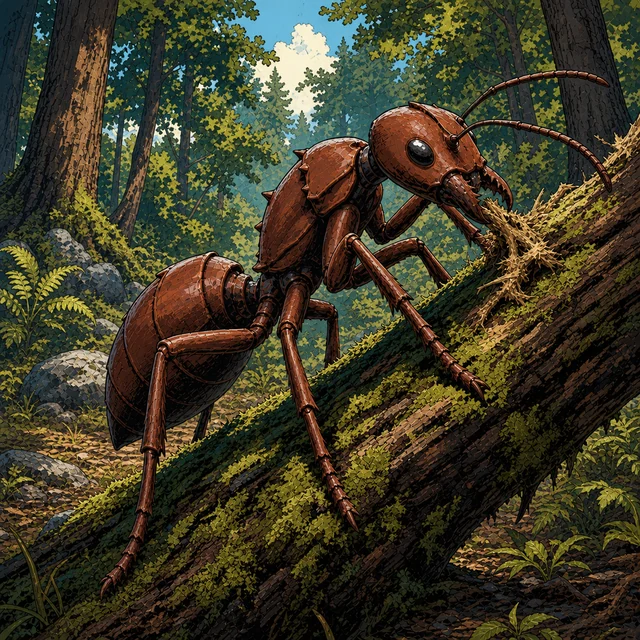
Giant Ant
A pony-sized colony predator protected by heavy chitin.
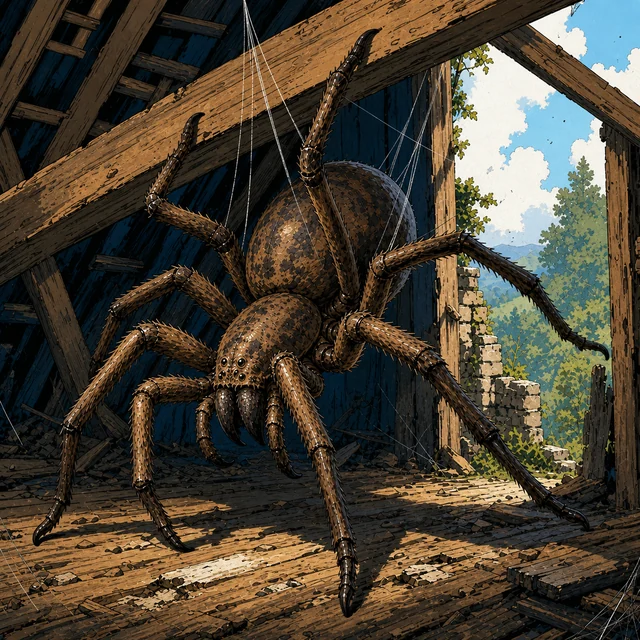
Giant Spider. animal. A horse-sized ambush predator that traps prey in venomous webs. Tags: living, corporeal.
Abilities
Web: Spend a Combat Action and oppose Unarmed Combat against the Athletics of one target within 15 m. If the spider wins, the target cannot take Movement Actions and suffers -1P on physical tests until the web is destroyed. Each web has 22 HP and 0 AP.
Giant Spider Venom: A Bite dealing HP damage exposes the target. Type: Injected. Delay:1D3 rounds. Potency: 51. Effect:-6 DEX for the Duration and 1D3 HP at each minute’s end; DEX 0 causes paralysis. Duration:6D10 minutes.
animal
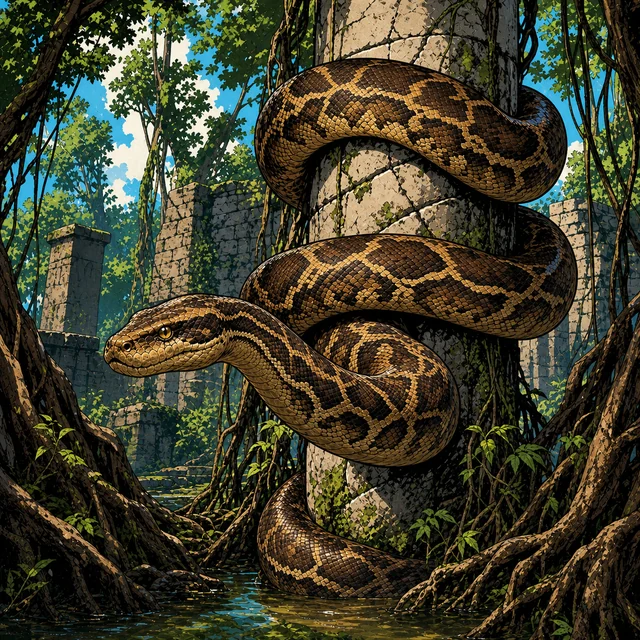
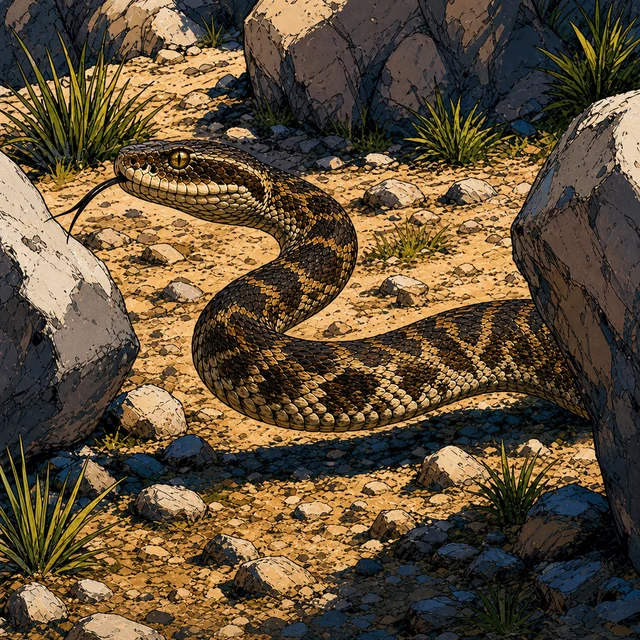
Viper
A fast venomous snake whose bite can bring down much larger prey.
Viper. animal. A fast venomous snake whose bite can bring down much larger prey. Tags: living, corporeal.
Abilities
Viper Venom: A Bite dealing HP damage exposes the target. Type: Injected. Delay: 1 round. Potency: 48. Effect:-3 CON for the Duration and 1D4 HP at each minute’s end; CON 0 causes death. Duration:6D10 minutes.
animal
Wolf
A swift pack predator armed with powerful jaws and claws.
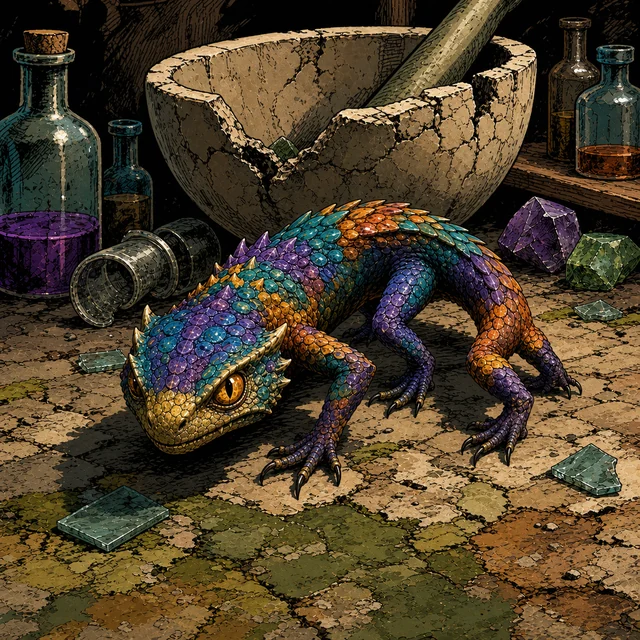
Basilisk. monster. A small, many-coloured reptile created by foul alchemy; its eyes and blood are deadlier than its jaws. Tags: living, corporeal.
Abilities
Death Gaze: Once per turn, freely choose a creature within 16 m that can see the basilisk’s eyes. It may avert its gaze, preventing the Gaze; without suitable Blind Sight it then cannot attack or React against the basilisk until its next turn. If it does not avert, oppose the basilisk’s Persistence with Resilience. Defeat reduces it to 0 HP and makes it Dying, subject to its type rules; victory grants immunity for this combat. Eye contact must be mutual and Blind Sight never triggers the Gaze. The basilisk may still Bite.
Basilisk Venom:Type: Injected or contact. Delay: Immediate. Potency: 65. Effect:-6 CON for the Duration and 1D4 HP at each minute’s end; CON 0 causes death. Duration:6D10 minutes.
Corrosive Blood: A mundane weapon that deals HP damage to the basilisk is destroyed after 1D4 rounds. Before the end of the wielder’s next turn, a Combat Action with abundant water or a suitable neutraliser prevents this.
monster
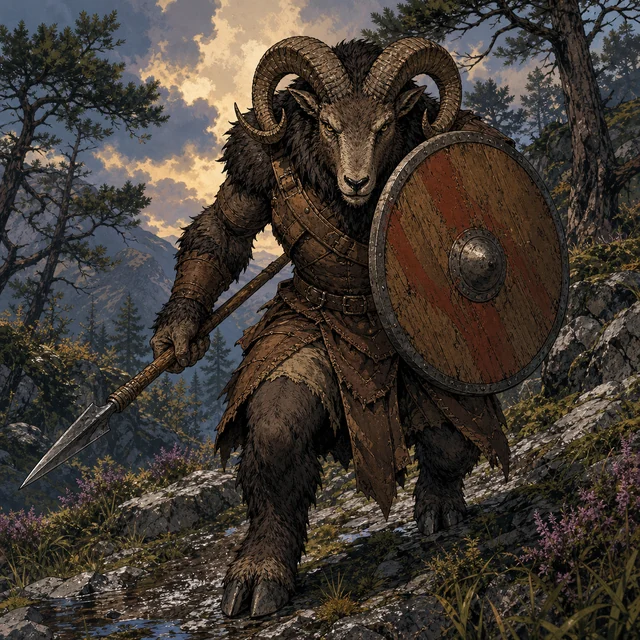
Beastman
Animal-headed humanoids who fiercely resist settlement of their wild territories.
living
corporeal
STR
13 (2D6+6)
CON
16 (1D6+12)
DEX
11 (3D6)
SIZ
16 (1D6+12)
INT
13 (2D6+6)
POW
11 (3D6)
CHA
7 (2D6)
HP
16
MWL
8
PP
11
Movement
15 m
Combat Order
9
AP
2 leather
DM
+1D4
Skills
Dodge 40%
Persistence 30%
Resilience 30%
Deception 40%
Natural Lore 70%
Close Combat 50%
Unarmed Combat 60%
Attacks
Club — Close Combat 50%, 1D6 + 1D4, Light
Shortspear — Close Combat 50%, 1D6 + 1D4, Medium
Medium Shield — Close Combat 50%, 1D6 + 1D4, Heavy
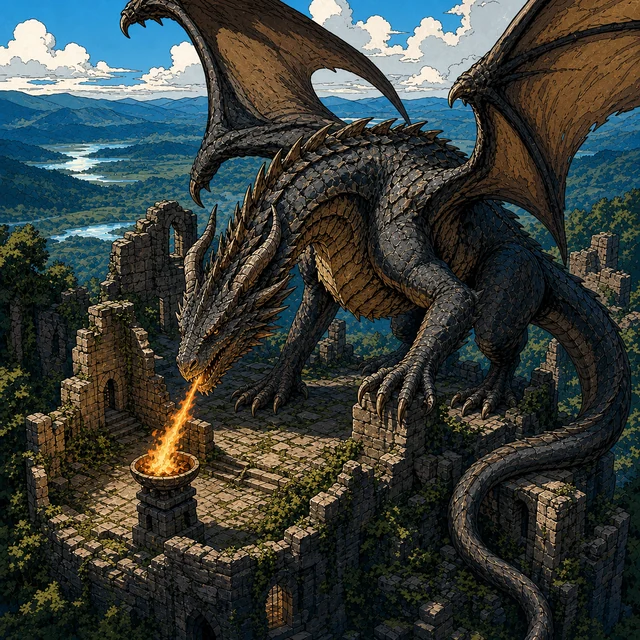
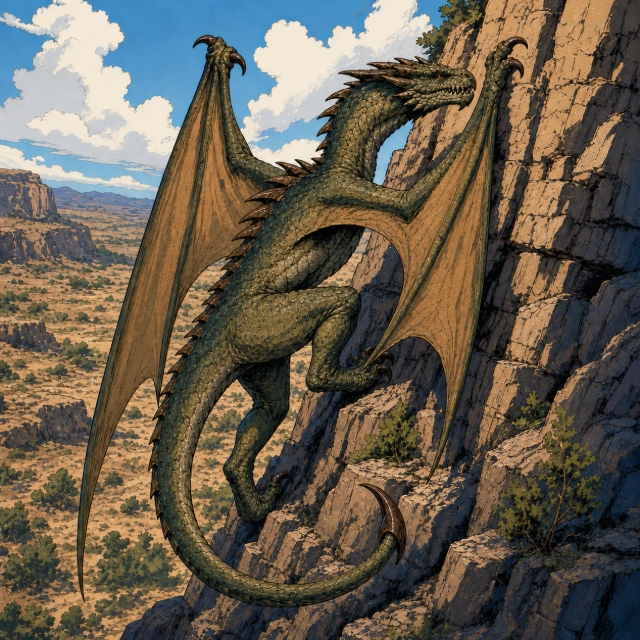
Dragon. monster. An ancient, intelligent flying reptile whose magic and temperament vary widely. Tags: living, corporeal.
Abilities
Double Claw 2 (Multiattack): Make two Claw attacks. Exceptional Skill (Unarmed Combat) I normally removes the second attack’s -1P.
Breathe Flame: Spend a Combat Action. A 26 m cone, 26 m wide at its end, deals 4D6 fire damage; roll once. An aware target may use its base Reaction to Dodge at -1P: success halves damage; failure takes full damage. AP applies. Afterward, another use within one hour requires Resilience, at cumulative -1P for each attempt that hour.
Fire Resistance: Reduce fire damage by 12 after other reductions.
Ancient dragons may know potent cells such as Conjure·Fire, Bend·Fire, Ward·Fire, or Scry·Fate.
monster
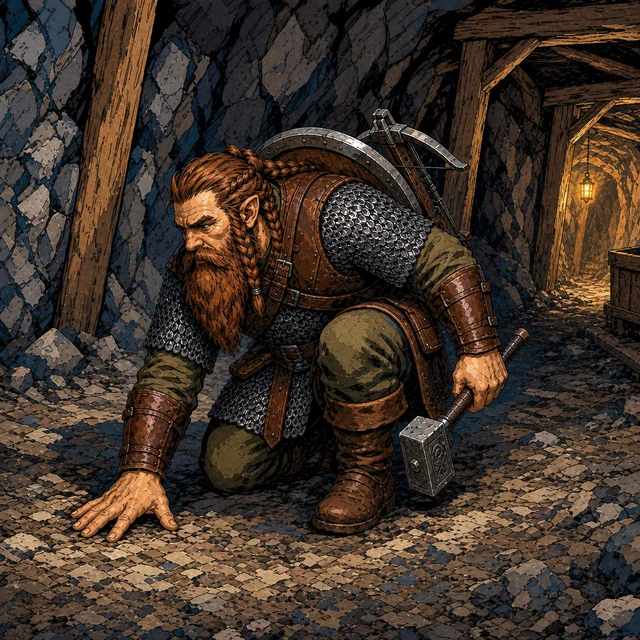
Dwarf
Stocky, long-lived people adapted to darkness and life around stone, with a remarkable sense for heat, depth, and unstable ground.
living
corporeal
STR
14 (4D6)
CON
19 (2D6+12)
DEX
11 (3D6)
SIZ
10 (2D6+3)
INT
13 (2D6+6)
POW
11 (3D6)
CHA
11 (3D6)
HP
15
MWL
8
PP
11
Movement
12 m
Combat Order
5
AP
5 chainmail
DM
+0
Skills
Dodge 20%
Persistence 40%
Resilience 55%
Athletics 50%
Mechanisms 40%
Trade 60%
Craft 70%
Close Combat 65%
Ranged Combat 45%
Attacks
War Hammer or Battleaxe — Close Combat 65%, 1D8 + 0, Medium
Dwarf. monster. Stocky, long-lived people adapted to darkness and life around stone, with a remarkable sense for heat, depth, and unstable ground. Tags: living, corporeal.
Abilities
Blind Sight (heat): Thermoception perceives heat-contrasting targets regardless of illumination. Solid barriers, heavy insulation, and ambient-temperature targets defeat it. It grants no colour, writing, fine visual detail, or eye contact.
Earth Sense: While touching connected earth or stone, the dwarf knows approximate depth and whether the surrounding chamber is structurally unstable.
Dwarven Shapers commonly favour Bend, Alter, Ward, or Scry·Earth/Stone cells.
monster
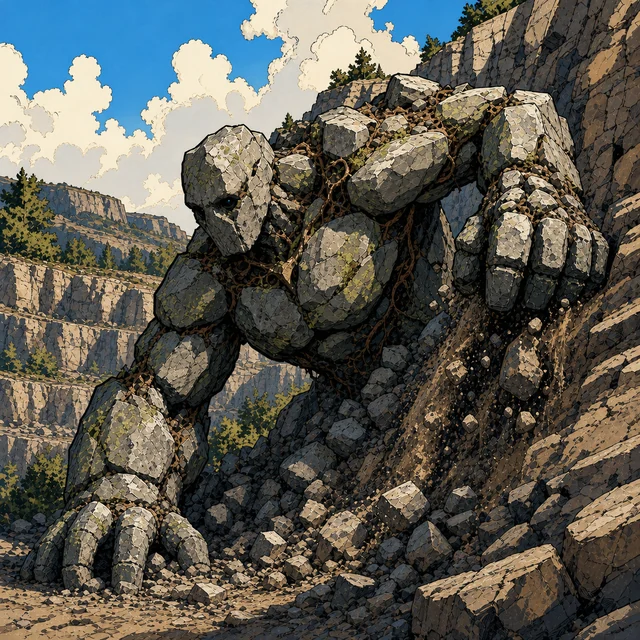
Elemental
Raw elemental substance embodied as water, darkness, flame, stone, or storm.
corporeal
elemental
soulless
mindless
STR
—
CON
—
DEX
—
SIZ
by rank
INT
—
POW
—
CHA
—
Use the rank table; Combat Order 10 is an explicit profile value because Elementals have no DEX or INT.
Skills
Perception 80%
Deception 80% while merged with a substantial quantity of its own element
rank-table combat skills
Attacks
Engulf — Attack by rank, rank damage, every other creature within the listed radius
subtype sets resistance and damage kind.
Talents
Small: Exceptional Skill (Dodge) I. Large: Exceptional Skill (Attack) I. Huge: Exceptional Skill (Persistence) I. Medium: none.
Elemental. monster. Raw elemental substance embodied as water, darkness, flame, stone, or storm. Tags: corporeal, elemental, soulless, mindless.
Abilities
Rank
SIZ
HP
MWL
PP
Move
CO
AP
DM
Damage
Area
Attack
Dodge
Persistence
Resilience
Small
3
3
2
0
15 m
10
0
—
1D6
1 m
15%
100%
30%
100%
Medium
9
9
5
0
23 m
10
0
—
2D6
3 m
45%
90%
60%
100%
Large
21
21
11
0
30 m
10
0
—
3D6
7 m
100%
60%
90%
100%
Huge
50
50
25
0
45 m
10
0
—
4D6
16 m
—
30%
100%
100%
Engulf: Spend one Combat Action, centred on the Elemental; complete barriers block it. Roll damage once. Small through Large roll Attack once, which must succeed and win against each target’s listed resistance separately.
Overwhelming Engulf: Huge rolls no Attack. Critical resistance negates damage, Success takes half, and Failure or Fumble takes full damage.
Undine — Drown: Resilience; HP damage; ignores AP.
Salamander — Burn: Resilience; HP damage; AP applies.
Gnome — Crush: Resilience; HP damage; AP applies.
Sylph — Buffet: Resilience; HP damage; AP applies.
Elemental Nature: Immune to poison, disease, and its own element.
Elemental Sense: Perception 80% detects invisible, Spirit, and magical targets regardless of light or invisibility; a solid barrier blocks it. Ordinary darkness still affects ordinary, nonmagical targets. Oppose concealment with Deception.
Camouflage: Deception 80% while merged with matching water, fire, stone, darkness, or cloud.
monster
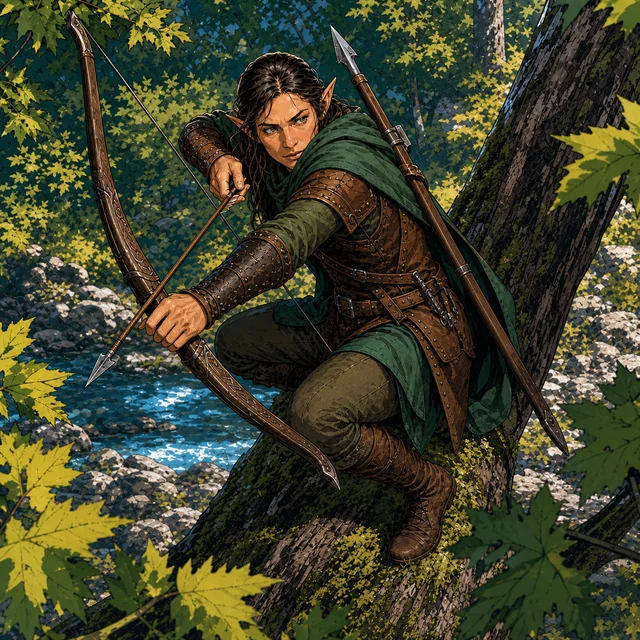
Elf
Long-lived, keen-sighted people with a strong affinity for forests and living landscapes, known for quick grace, enduring memories, and traditions shaped by the places they call home.
Elf. monster. Long-lived, keen-sighted people with a strong affinity for forests and living landscapes, known for quick grace, enduring memories, and traditions shaped by the places they call home. Tags: living, corporeal.
Abilities
Low-Light Sight: Partial Darkness counts as Illuminated and Darkness as Partial Darkness. Pitch Black and obscurity are unchanged.
Elf Shapers often favour Alter·Flesh, Scry·Flesh, Bend·Earth/Stone, and protective nature cells.
monster
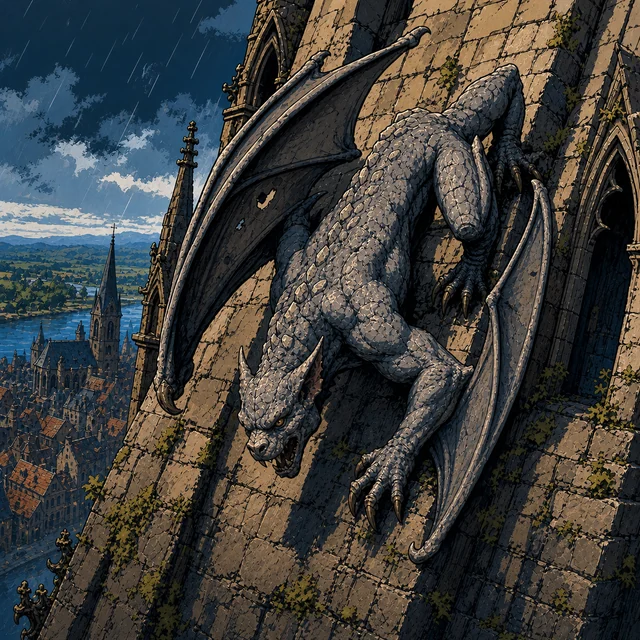
Gargoyle
A grey, winged humanoid predator often mistaken for a grotesque stone statue.
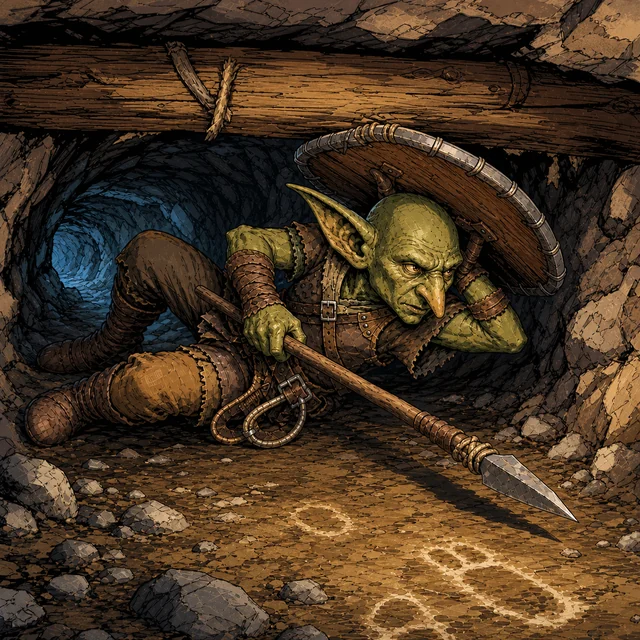
Goblin. monster. Small, agile people with heat-sensitive perception and a knack for navigating cramped, difficult, or overlooked places. Tags: living, corporeal.
Abilities
Blind Sight (heat): Thermoception perceives heat-contrasting targets regardless of illumination. Solid barriers, heavy insulation, and ambient-temperature targets defeat it. It grants no colour, writing, fine visual detail, or eye contact.
Leaders and shamans may know combat, trickery, or survival-themed Shaping cells.
monster
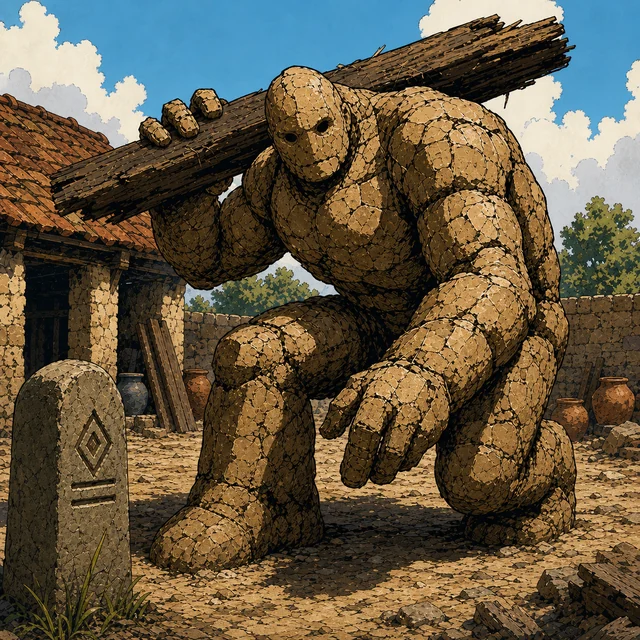
Golem
A clay construct animated to execute a sacred command with literal, tireless precision.
Golem. monster. A clay construct animated to execute a sacred command with literal, tireless precision. Tags: corporeal, construct, soulless, mindless.
Abilities
Programmed Task: A programmed Golem pursues only its stated task and obeys literally. A free-willed Golem is not bound by this rule.
Construct Body: It does not breathe, eat, sleep, bleed, or suffer poison or disease. At 0 HP it is disabled or destroyed; 0 PP does not incapacitate it.
Slow: It cannot Sprint. Free-willed Golems may learn Shaping.
monster
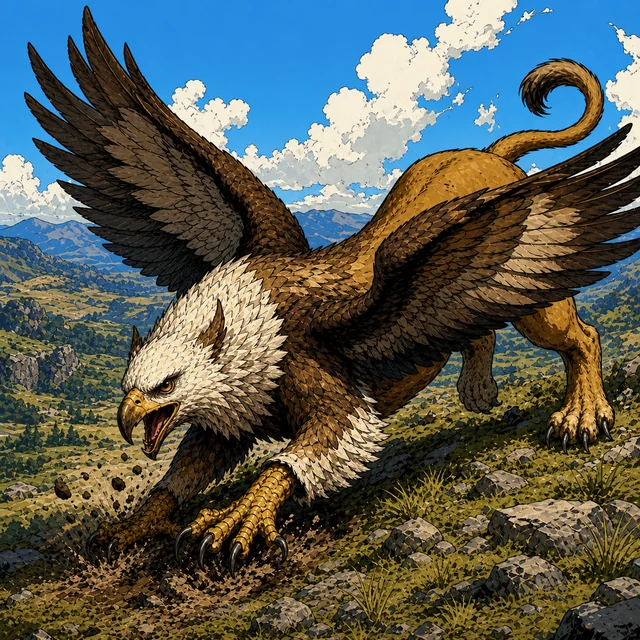
Griffin
A proud mountain predator with a lion's body, an eagle's head, and immense wings.
Griffin. monster. A proud mountain predator with a lion's body, an eagle's head, and immense wings. Tags: living, corporeal.
Abilities
Raking Dive (Multiattack): Spend the Combat and Movement Actions to fly at least 10 m straight and then make two Claw attacks. This replaces Charge, grants no Charge damage, and retains the base Reaction.
monster
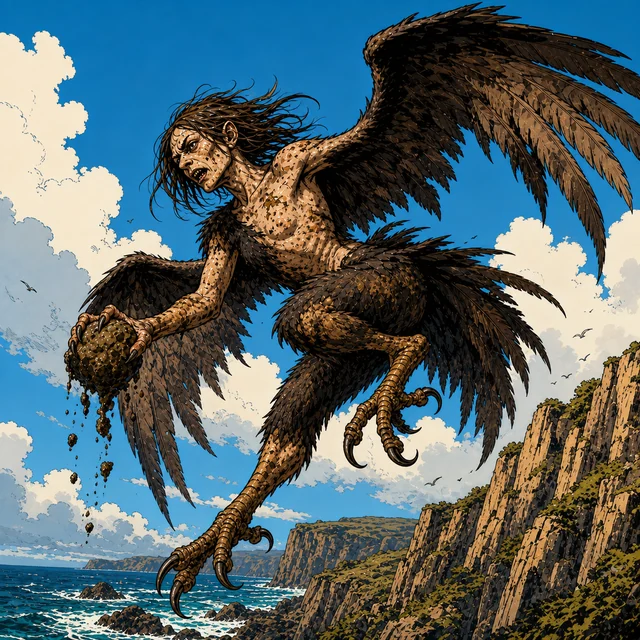
Harpy
A filthy, winged scavenger whose claws and missiles spread disease.
living
corporeal
STR
11 (3D6)
CON
11 (3D6)
DEX
18 (5D6)
SIZ
7 (2D6)
INT
11 (3D6)
POW
11 (3D6)
CHA
4 (1D6)
HP
9
MWL
5
PP
11
Movement
15 m ground, 30 m fly
Combat Order
15
AP
0
DM
+0
Skills
Dodge 50%
Persistence 25%
Resilience 60%
Athletics 60%
Deception 60%
Perception 75%
Natural Lore 60%
Ranged Combat 40%
Unarmed Combat 75%
Attacks
Claw — Unarmed Combat 75%, 1D6 + 0, Medium
Dropped Stone — Ranged Combat 40%, 1D6 per full 3 m fallen, maximum 10D6, Light, directly below
Dung — Ranged Combat 40%, no damage, Light, directly below
Harpy. monster. A filthy, winged scavenger whose claws and missiles spread disease. Tags: living, corporeal.
Abilities
Dropped Missile: Choose a target directly below the Harpy, no more than 30 m down. Dropping a stone or dung is a Ranged Combat attack; an aware target may React normally.
Filth: A damaging Claw, dung hit, or dung-coated stone exposes the victim to the Shakes. Type: Touch. Delay:1D2 days. Potency: 50. Effect: DEX remains halved while active; lose 1D6 HP after each Delay. Duration: Until the victim wins a repeated Resilience-versus-Potency test.
Stench: A dung hit gives -1P to Influence and Deception until the victim and equipment are washed for one hour. Harpies are immune to disease. Some know Bend·Force/Motion or Alter·Flesh.
monster
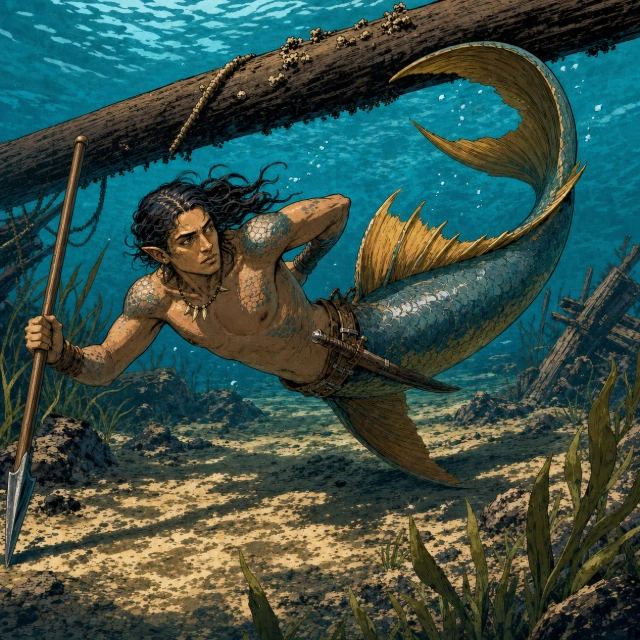
Merfolk
Air-breathing sea people adapted to long dives, whose settlements combine flooded passages with sheltered breathing chambers.
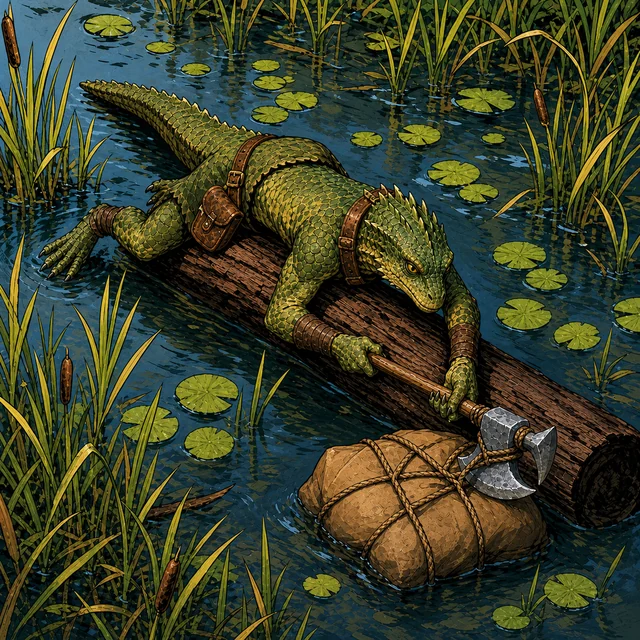
Lizardfolk. monster. Reptilian people adapted to hot climates, especially deserts, wetlands, and river valleys. Tags: living, corporeal.
Abilities
Scaled Hide: The Lizardfolk has 1 natural AP with no ENC. It stacks with worn armour, although worn armour still cannot be layered. Ward AP does not stack with this combined physical protection; use the Ward or the total physical AP, whichever is higher.
Counterbalancing Tail: Tests made primarily to knock the Lizardfolk prone, throw them, or force them to move suffer -1P.
Individual Lizardfolk may learn any appropriate Shaping cells.
monster
Ogre
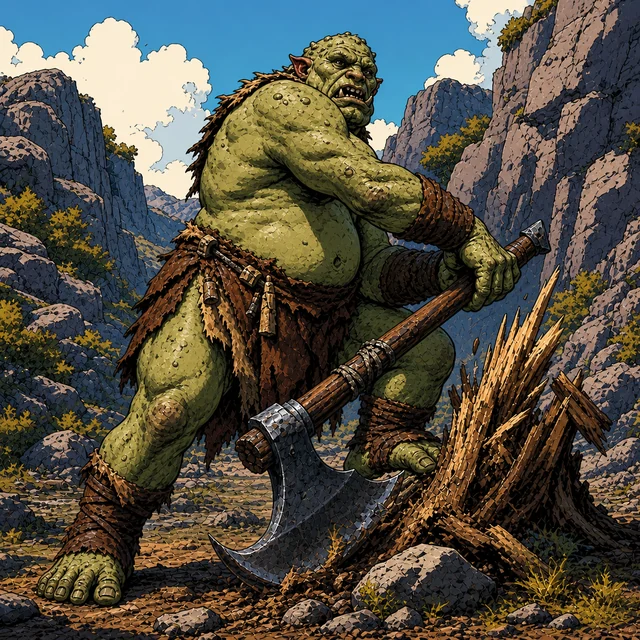
A massive, warty humanoid who dominates weaker creatures through brute force.
living
corporeal
STR
23 (3D6+12)
CON
13 (2D6+6)
DEX
11 (3D6)
SIZ
23 (3D6+12)
INT
10 (2D6+3)
POW
10 (2D6+3)
CHA
3 (1D6)
HP
18
MWL
9
PP
10
Movement
15 m
Combat Order
11
AP
2 skin
DM
+2D6
Skills
Dodge 35%
Persistence 45%
Resilience 35%
Athletics 35%
Deception 50%
Perception 50%
Natural Lore 35%
Close Combat 60%
Ranged Combat 40%
Unarmed Combat 60%
Attacks
Great Axe — Close Combat 60%, 2D8 + 2D6, Heavy
Improvised Rock — Ranged Combat 40%, 1D4 + 2D6, Light, 23 m
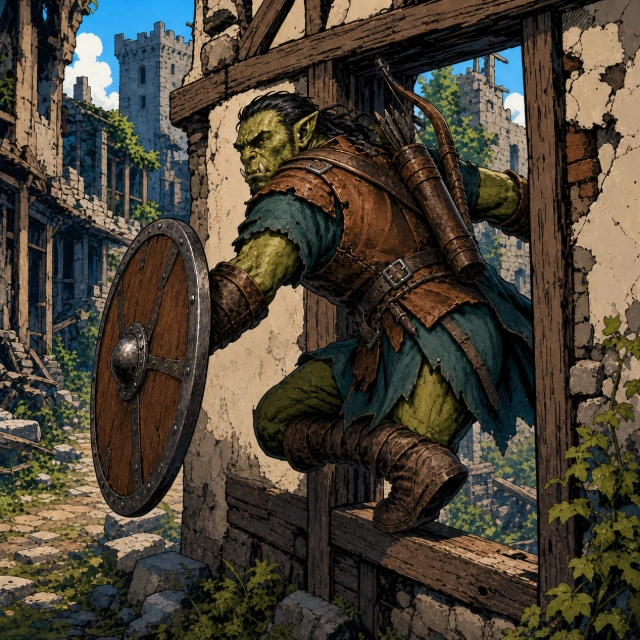
Tall, powerfully built people found in settled communities and travelling clans alike; their loyalties, ambitions, and temperaments vary as widely as those of humans.
living
corporeal
STR
14 (4D6)
CON
11 (3D6)
DEX
12 (4D6 drop lowest)
SIZ
14 (3D6+3)
INT
10 (2D6+3)
POW
10 (2D6+3)
CHA
11 (3D6)
HP
13
MWL
7
PP
10
Movement
15 m
Combat Order
8
AP
2 leather
DM
+1D4
Skills
Dodge 35%
Persistence 35%
Resilience 35%
Athletics 35%
Deception 45%
Perception 45%
Craft 40%
Close Combat 40%
Ranged Combat 50%
Attacks
Scimitar — Close Combat 40%, 1D8 + 1D4, Medium
Medium Shield — Close Combat 40%, 1D6 + 1D4, Heavy
Orc. monster. Tall, powerfully built people found in settled communities and travelling clans alike; their loyalties, ambitions, and temperaments vary as widely as those of humans. Tags: living, corporeal.
Abilities
Adrenaline Surge: Once per combat, immediately after becoming Wounded or Fatigued, the Orc ignores the test, Movement, and Combat Order penalties caused by Wounded and Fatigued until the end of their next turn. They also ignore the first 1 HP they would lose from Bleeding during that time. Bleeding is not removed and continues normally afterwards. Exhausted, unconscious, and Dying are unaffected.
Individual Orcs may learn any appropriate Shaping cells.
monster
Pixie
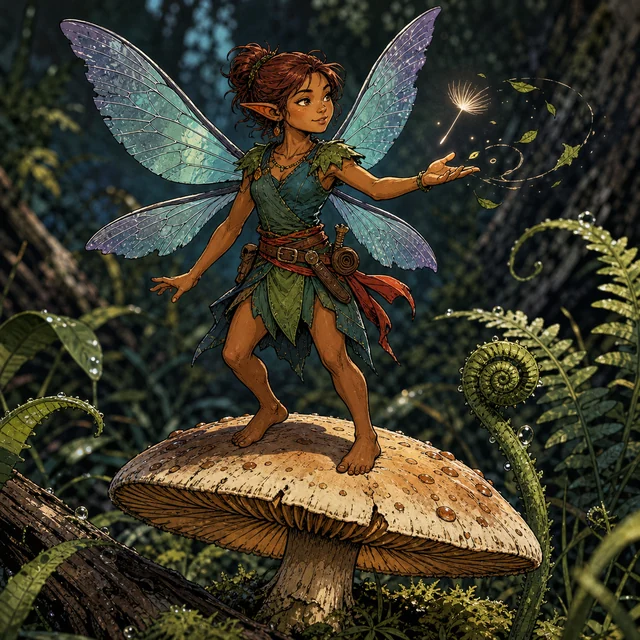
Tiny winged people whose speed, flight, and affinity for subtle magic let them flourish in places larger folk overlook.
Pixie. monster. Tiny winged people whose speed, flight, and affinity for subtle magic let them flourish in places larger folk overlook. Tags: living, corporeal.
Abilities
Magical Pixies may know cells such as Conjure·Mind, Bend·Air/Storm, or Bend·Paths; set Shaping to suit the individual.
monster
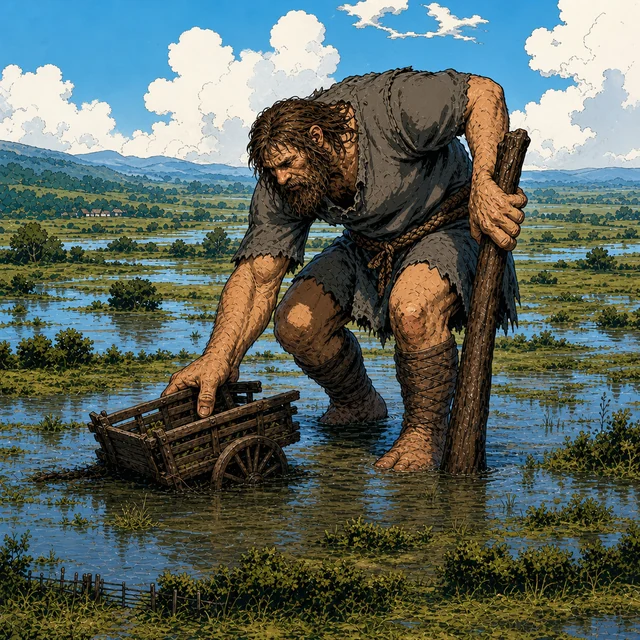
Troll
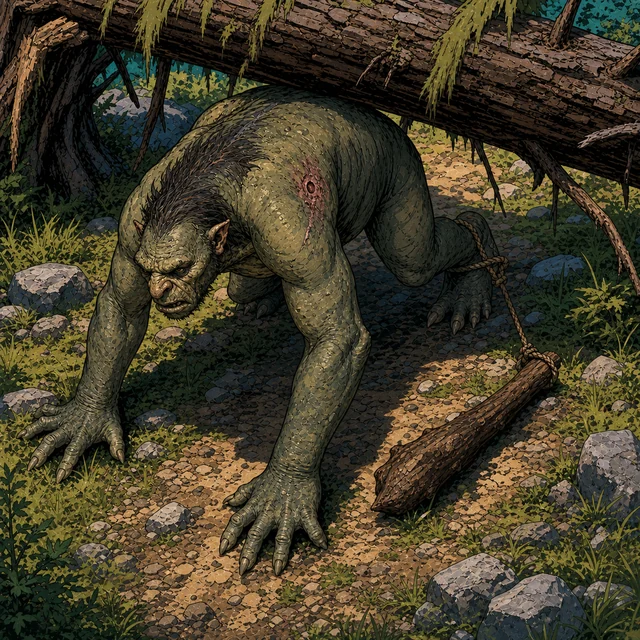
A large, solitary predator whose body repairs wounds with terrifying speed.
Troll. monster. A large, solitary predator whose body repairs wounds with terrifying speed. Tags: living, corporeal.
Abilities
Regeneration: At the start of its turn, even at 0 HP, recover 1D6 HP unless it has taken fire damage since the start of its previous turn. This bypasses Wounded’s recovery lock and removes Bleeding and Dying; Wounded remains. If HP rises above 0, the Troll wakes and may act that turn.
Blind Sight (heat): Thermoception perceives heat-contrasting targets regardless of illumination. Solid barriers, heavy insulation, and ambient-temperature targets defeat it. It grants no colour, writing, fine visual detail, or eye contact.
monster
Werewolf
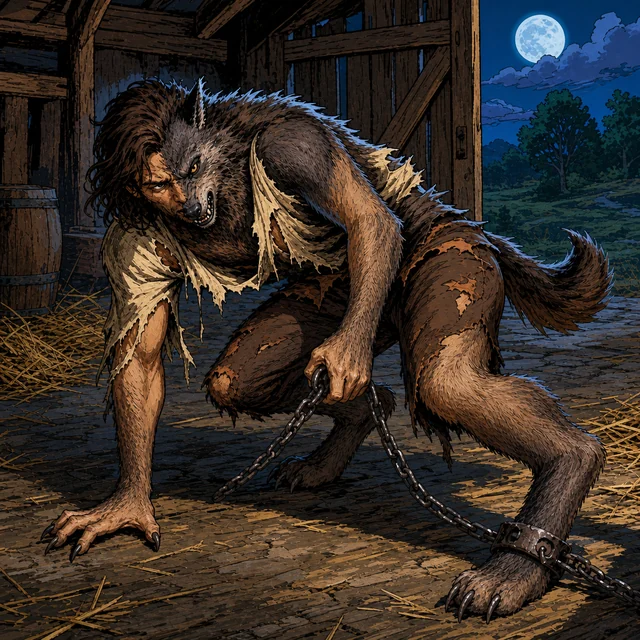
A person who can become a giant wolf willingly—or involuntarily beneath the full moon.
living
corporeal
STR
11/22 (3D6/6D6)
CON
11 (3D6)
DEX
11 (3D6)
SIZ
13 (2D6+6)
INT
13/6 (2D6+6/1D6+3)
POW
11 (3D6)
CHA
11, human/wolf (3D6)
HP
12
MWL
6
PP
11
Movement
15/30 m
Combat Order
12/9
AP
0/1
DM
+0/+1D6, human/wolf
Skills
Dodge 60%
Persistence 60%
Resilience 60%
Athletics 60%
Deception 60%
Perception 60%
Natural Lore 80%
human Close Combat 35%
human Ranged Combat 25%
wolf Unarmed Combat 60%
Attacks
Human Arming Sword — Close Combat 35%, 1D8 + 0, Medium
Werewolf. monster. A person who can become a giant wolf willingly—or involuntarily beneath the full moon. Tags: living, corporeal.
Abilities
Shapeshift: Spend a Combat Action on two consecutive turns; transformation completes after the second. A full moon forces wolf form.
Night Vision: In either form, natural surface night counts as Illuminated. It does not overcome sealed, underground, or supernatural darkness or obscurity.
Wolf Immunity: In wolf form, mundane attacks deal no damage unless silver, fire, or magical; a qualifying source deals normal damage. Poison, suffocation, and drowning still work. Mystics favour Alter·Flesh, Scry·Flesh, or Earth/Stone cells.
monster
Wyvern
A lean, two-legged draconic predator armed with jaws, claws, and a venomous tail.
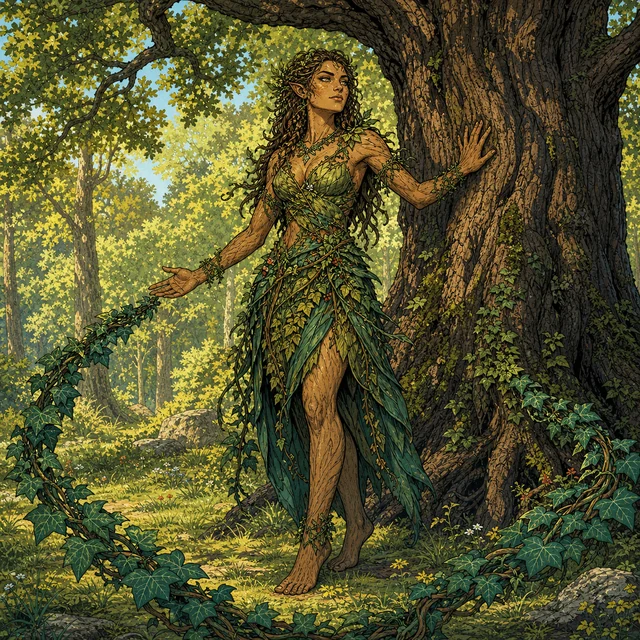
Grove Anchor: The Dryad cannot leave its grove; doing so dissolves its body and returns its Spirit to the tree. If the tree is destroyed, it cannot reform.
Tree Passage: While touching its tree, spend a Movement Action to dissolve the body or emerge beside the tree.
One with the Grove: As a Combat Action, choose one 3 m-radius patch of vegetation in the grove. Until this ability is used again, movement through it costs double, or existing vegetation opens to permit normal movement. The Dryad may instead cause harmless growth, flowers, or fruit. Damage and restraint require Shaping.
nymph
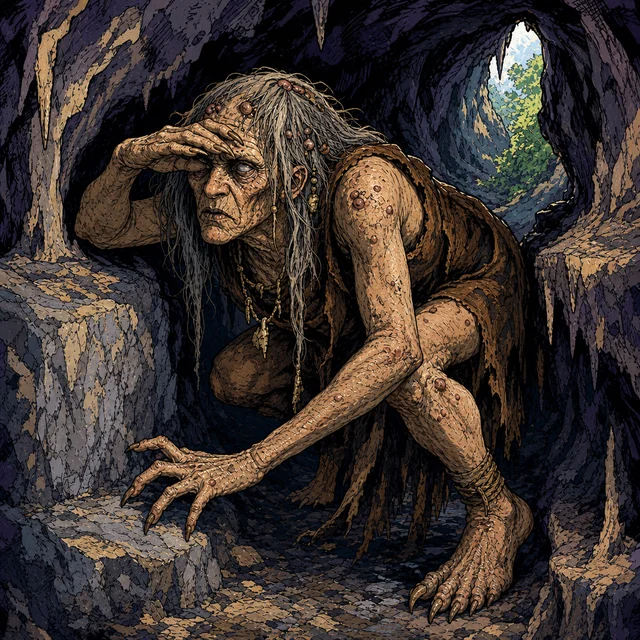
Hag
A cave or darkness spirit that hunts beyond its domain only between sunset and dawn.
Nightbound: The Hag may leave its domain only at night. Dawn outside the domain or direct natural sunlight destroys its body and returns its Spirit home.
Create Shade: In Darkness within its domain, spend a Combat Action and 3 PP to create one Small Shade using the Elemental profile. Give it one simple standing order; it follows literally and otherwise protects the Hag. Changing the order costs the Hag a Combat Action. It acts immediately after the Hag and remains within the domain until destroyed or dismissed. Only one may exist at a time.
nymph
Naiad
A water spirit anchored to one stream, lake, swamp, or coastal reach.
Water Anchor: Each complete 10 m band travelled away from its water costs 1 PP; returning restores none. The Naiad recovers PP only while submerged. At 0 PP, its body collapses into water and its Spirit returns home.
Undine Transformation: Spend a Combat Action and 9 PP to adopt a Medium Undine shell under the shared rule. A Combat Action restores normal form.
nymph
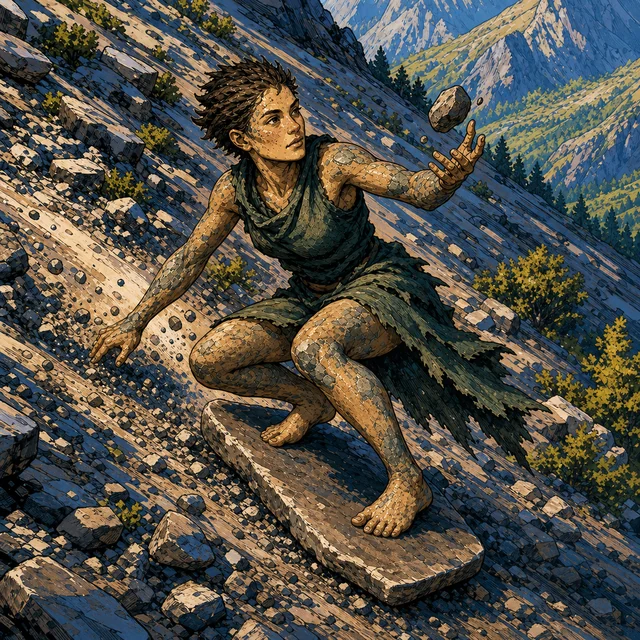
Oread
A stone spirit anchored to one hill, mountain, valley, or similar landform.
corporeal
spirit
anchored
STR
7 (2D6)
CON
12 (3D6+3)
DEX
17 (3D6+6)
SIZ
10 (2D6+3)
INT
14 (3D6+3)
POW
22 (2D6+15)
CHA
15 (2D6+9)
HP
11
MWL
6
PP
22
Movement
15 m
Combat Order
16
AP
0
DM
+0
Skills
Unarmed Combat 35%
Ranged Combat 40%
Dodge 40%
Persistence 30%
Resilience 50%
Natural Lore 40%
Deception 80%
Perception 50%
Performance 50%
Shaping 70%
Attacks
Stone Fist — Unarmed Combat 35%, 1D6 + 0, Medium
Thrown Rock — Ranged Combat 40%, 1D4 + 0, Light, 7 m
Earth Anchor: Each complete 10 m band travelled away from its domain costs 1 PP; returning restores none. The Oread recovers PP only within its domain. At 0 PP, its body petrifies and its Spirit returns home.
Gnome Transformation: Spend a Combat Action and 9 PP to adopt a Medium Gnome shell under the shared rule. A Combat Action restores normal form.
spirit
Ancestor Spirit
A deceased relative who preserves family memory, craft, and counsel.
Ancestor Spirit. spirit. A deceased relative who preserves family memory, craft, and counsel. Tags: incorporeal, spirit.
Abilities
Helpful Possession: The Ancestor and a willing Living relative each spend a Combat Action while Close; no Spirit Combat is required. Choose 1D6 appropriate inherited skills when creating it. During possession, the host gains +1B with them and normally chooses the shared actions.
Disease Spirit. spirit. A predatory spirit embodying one disease. Tags: incorporeal, spirit.
Abilities
Disease Possession: Choose one disease when creating the Spirit. The host chooses shared actions, immediately contracts the disease, and suffers -1P on Resilience against disease. A successful recovery test prevents that interval’s effect, but the disease remains and tests again after its Delay until the Spirit is expelled. Expulsion permits normal recovery but removes no accumulated effect.
spirit
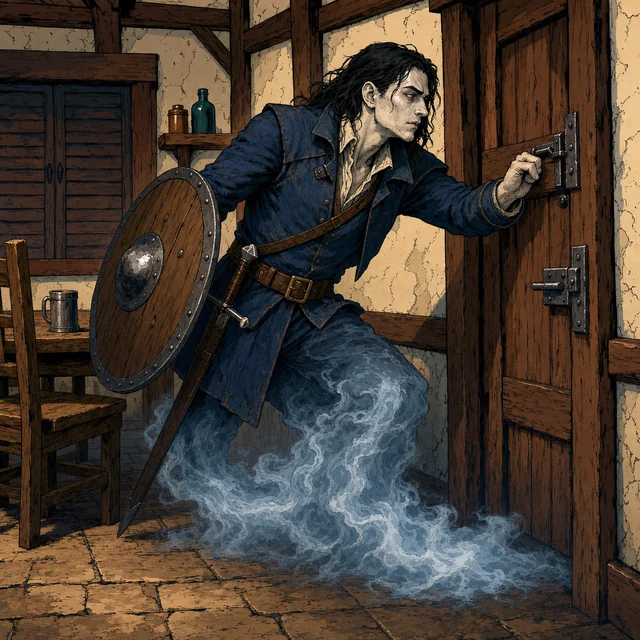
Ghost
A dead soul held in the world by obsession, violence, or unfinished duty; it is neither Undead nor Soulless.
Ghost. spirit. A dead soul held in the world by obsession, violence, or unfinished duty; it is neither Undead nor Soulless. Tags: incorporeal, spirit.
Abilities
Dominant Possession: The Ghost normally chooses shared actions. At each turn’s start, the host opposes Persistence with the Ghost’s Persistence. A host win lets it choose that turn; a Critical win by the host also ends possession.
Echoes of Life: A particular Ghost may retain appropriate mundane skills or Shaping cells known while alive.
spirit
Guardian Spirit
A bound spirit that protects a place, object, tomb, or treasure according to stated conditions.
Guardian Spirit. spirit. A bound spirit that protects a place, object, tomb, or treasure according to stated conditions. Tags: incorporeal, spirit, anchored.
Abilities
Binding: Define the anchor and conduct that triggers the Guardian. It cannot move more than 17 m from the anchor.
Alarm: When its condition is broken, it howls audibly to 170 m and identifies the intruders. On its next turn it spends its Combat Action to manifest, then acts according to its binding.
spirit
Healing Spirit
A luminous restorative spirit and natural enemy of Disease Spirits.
Healing Spirit. spirit. A luminous restorative spirit and natural enemy of Disease Spirits. Tags: incorporeal, spirit.
Abilities
Shaping cells: Alter·Flesh, Scry·Flesh.
Disease Hunter: It may initiate Spirit Combat with a Disease Spirit possessing a creature it touches. The host suffers no PP damage from that combat. Banishment ends the disease possession. A Healing Spirit cannot possess.
spirit
Magic Spirit
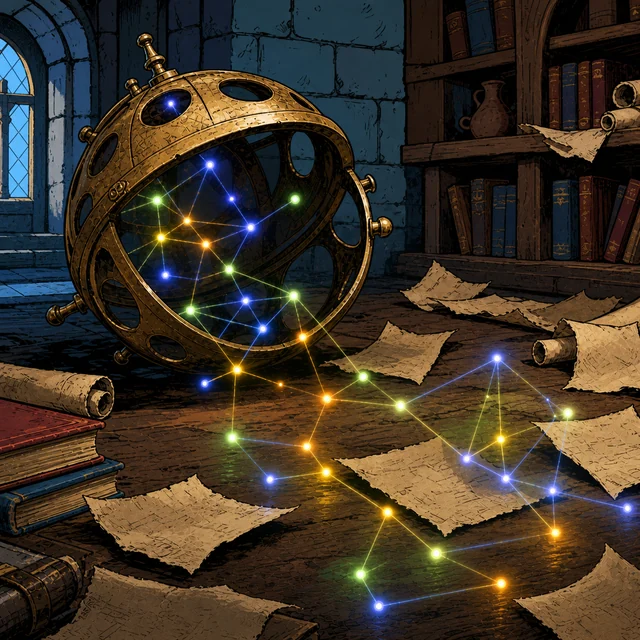
A constellation of coloured lights gathered around one coherent magical theme.
Magic Spirit. spirit. A constellation of coloured lights gathered around one coherent magical theme. Tags: incorporeal, spirit.
Abilities
Shaping Cells: Choose 1D6 cells sharing one Form or coherent theme. Shaping is POW × 5%, capped at 100%. The Spirit casts and spends its own PP; it cannot lend PP, active capacity, or cells.
Defensive Spirit: It cannot initiate Spirit Combat but may defend when another creature initiates it.
spirit
Passion Spirit
A predatory embodiment of fear, madness, or pain; choose one passion when creating it.
Passion Spirit. spirit. A predatory embodiment of fear, madness, or pain; choose one passion when creating it. Tags: incorporeal, spirit.
Abilities
The host chooses shared actions except when Madness incapacitates it.
Fear Possession: The host suffers -1P on attacks and Reactions.
Pain Possession: The host suffers -1P on every skill test.
Madness Possession: At each stressful scene’s start, oppose the Spirit’s Persistence with the host’s Resilience. If the Spirit wins, the host is Incapacitated—no Actions or Reactions—for 1D6 × 10 minutes. A host win prevents another fit that scene.
undead
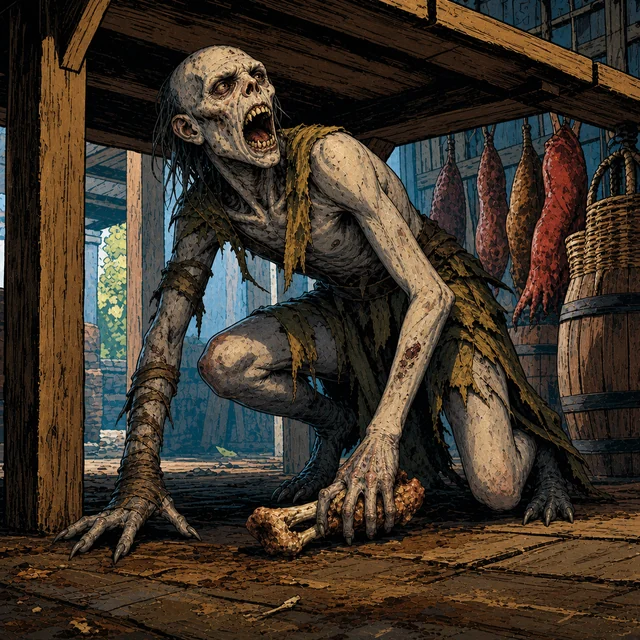
Ghoul
An intelligent corpse-eater driven by endless hunger.
corporeal
undead
soulless
STR
14 (4D6)
CON
11 (3D6)
DEX
11 (3D6)
SIZ
13 (2D6+6)
INT
11 (3D6)
POW
11 (3D6)
CHA
4 (1D6)
HP
12
MWL
6
PP
11
Movement
15 m
Combat Order
11
AP
0
DM
+1D4
Skills
Unarmed Combat 60%
Dodge 40%
Persistence 30%
Resilience 40%
Lore (Undead) 75%
Athletics 40%
Deception 60%
Perception 30%
Attacks
Claw — Unarmed Combat 60%, 1D4 + 1D4, Medium
Bite — Unarmed Combat 60%, 1D6 + 1D4, Medium
a damaging Bite exposes the target to Ghoul Venom.
Ghoul. undead. An intelligent corpse-eater driven by endless hunger. Tags: corporeal, undead, soulless.
Abilities
Ghoul Howl: Freely at the start of its turn, affect every Living listener within 11 m. A howl remains audible until the Ghoul’s next turn. Oppose the highest-Persistence audible Ghoul with each listener’s Persistence. Defeat gives -1P on attacks and Reactions while any howl is audible; victory grants immunity for this combat. A listener tests once per round and multiple howls do not stack. The Ghoul retains its normal actions.
Ghoul Venom:Type: Injected, ingested, or smeared. Delay:1D3 rounds. Potency: 22. Effect: Paralysed. Duration:1D10 hours or until healing restores at least 1 HP.
undead
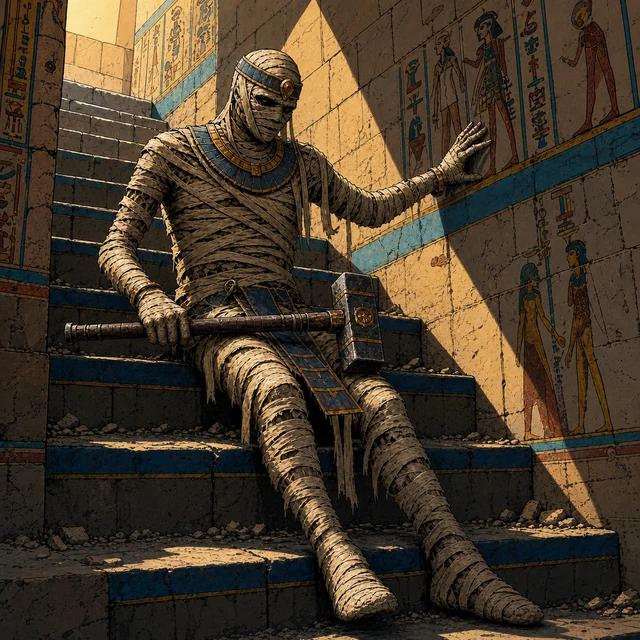
Mummy
An intelligent, ritually preserved ruler or guardian with no Shaping by default.
Mummy. undead. An intelligent, ritually preserved ruler or guardian with no Shaping by default. Tags: corporeal, undead, soulless.
Abilities
Flammable: Fire that deals HP damage ignites the Mummy. At each round’s end it suffers that damage again without reapplying AP. Extinguishing costs its Combat Action, Movement Action, and all Reactions while it rolls, smothers the flames, or enters water.
Preserved Flesh: Alter·Flesh repairs it at normal Intensity. Mind affects it normally; Soulless protects only against Spirit.
Vampire. undead. An intelligent undead predator sustained by stolen blood and life force. Tags: corporeal, undead, soulless.
Abilities
Night Vision: Natural surface night counts as Illuminated. It does not overcome sealed, underground, or supernatural darkness or obscurity.
Blind Sight (life): Detects living beings regardless of illumination. Walls and complete solid cover block it; it grants no colour, writing, fine visual detail, or eye contact.
Blood Reserve: Maximum 18, current 0. Use current Reserve as PP and maximum Reserve instead of POW for the active Shaping limit. It pays costs, Counter, rituals, and commitments, but never recovers naturally; 0 does not incapacitate the Vampire. It also recovers no HP naturally.
Clinging Bite: If Bite deals HP damage, establish a grapple with that target without another Action or test.
Drain: While grappling a Living target, spend a Combat Action and roll 1D6. If the target began above 0 PP, drain actual PP up to its current PP; only if it began at 0 PP, drain HP instead. Drain ignores AP and never spills from PP to HP. Allocate the actual amount between Vampire HP and Blood Reserve within their maxima; excess is lost.
Mist Form: Spend a Combat Action to become mist with carried nonliving equipment. It is immune to mundane physical attacks and can only use its Movement Action or a Combat Action to reform. Magic and sunlight work normally.
Death Mist: At 0 HP, the Vampire is disabled until the start of its next turn, then enters Mist Form at 1 HP. Before then, an adjacent creature can spend a full round to stake and decapitate it, destroying it permanently.
Sunlight: Direct natural sunlight deals 2 HP at each round’s end, ignoring AP; complete opaque covering prevents exposure.
Holy Aversion: Choose a sacred symbol. Presenting it within sight spends a Combat Action and opposes the bearer’s Persistence with the Vampire’s Resilience. If the bearer wins, the Vampire loses 1D4 HP ignoring AP and cannot attack the bearer until the bearer’s next turn while the symbol remains visible.
Individual Vampires may learn Shaping cells and pay for them from Blood Reserve.
undead
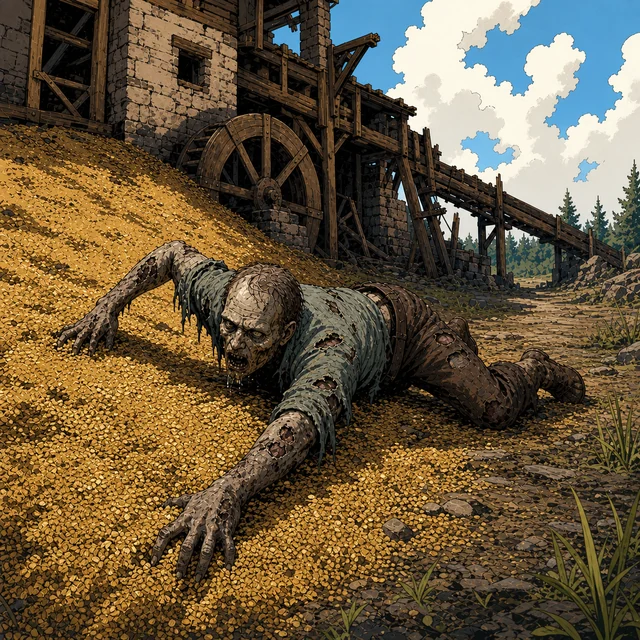
Zombie
A rotting corpse animated to obey simple commands or attack the living.